
what is laboratory de ion water machine
The laboratory deionized water machine is a device used for preparing deionized water. Its main function is to remove cations and anions from water through various water treatment techniques. Thereby producing high-purity deionized water. This equipment is widely used in industries such as medicine, electronics, and chemical engineering. Our laboratory deionizer uses pre-treatment filtration, reverse osmosis (RO), ion exchanger UV sterilization and other methods to remove impurities and bacteria from the water.
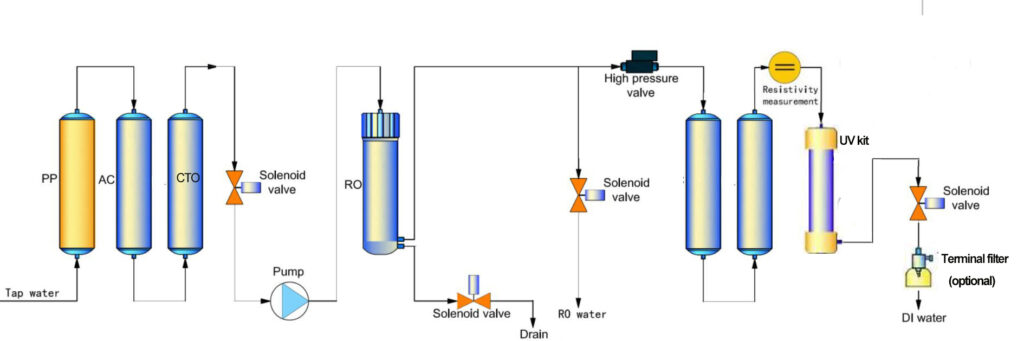
Parameter of deionizer water machine
| Model | DI-15 | DI-30 | DI-45 | DI-60 | |||
| Output(25℃)* | 15 liters/hour | 30 liters/hour | 45 liters/hour | 60 liters/hour | |||
| Pure water outlet | One deionized water and one reverse osmosis water | ||||||
| Deionized water quality | |||||||
| Resistivity | 15-18.2MΩ.cm | ||||||
| Particle(>0.1μm) | N/A | N/A | N/A | N/A | |||
| RO water quality | |||||||
| Ion rejection rate | 96%-99% (new RO membrane) | ||||||
| Organic rejection rate | >99%, when MW>200 Dalton | ||||||
| Particles rejection rate | >99% | ||||||
| Feed water requirements | Tap water, temperature:5-45℃,pressure:1.0-4.0Kgf/cm2 | ||||||
| Electrical requirements | AC110-240V, 50/60Hz | ||||||
| Power | 55W | 60W | 70W | 78W | |||
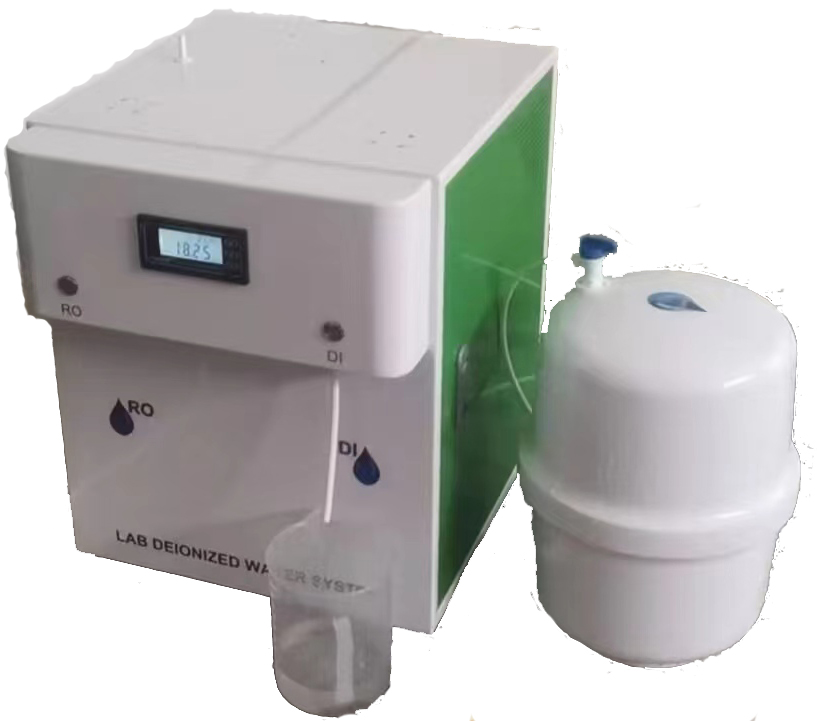
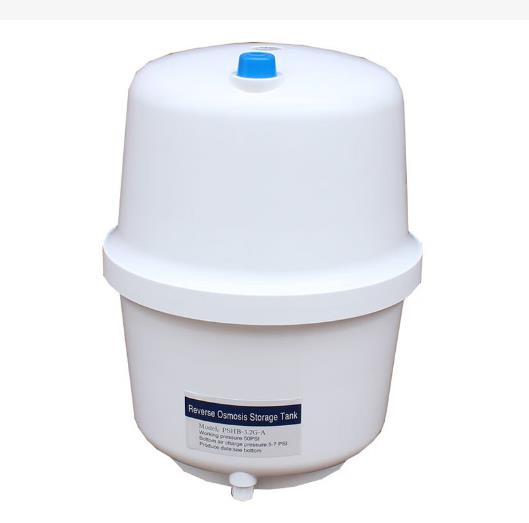
Features of laboratory de ion water machine
- Microcomputer control: Power on self-test, screen LCD display, real-time monitoring of UP ultra pure water resistivity and RO pure water conductivity.
- Easy to install and use
- Multiple installation methods: suitable for different laboratory environments.
- High water production and low energy consumption: For example, some models can produce 15-60 liters of water per hour. With a resistivity of 16-18.2 M Ω· cm, which is better than the first level water standard of GB/T6682-2008.
Application scope of laboratory de ion water machine
Laboratory deionized water machines are widely used in many fields. Their main function is to convert tap water into high-purity deionized water through a series of processing steps. These devices usually include pretreatment, reverse osmosis, ion exchange and terminal disinfection. The specific applications are as follows:
- Pharmaceutical industry: The high-purity water provided by laboratory deionized water machines is used in drug preparation, dilution and cell culture processes to ensure the accuracy of experimental operations and analysis and avoid the interference of impurities on experimental results.
- Electronics industry: In the process of electronic manufacturing, high-purity deionized water is required to clean circuit boards, produce chips, etc. to ensure the quality and performance of products.
- Chemical industry: Laboratory deionized water machines are used to prepare chemical reagents, conduct chemical analysis and experiments. Such as gas chromatography (GC), high-performance liquid chromatography (HPLC), etc.
- Scientific research and education: Deionized water machines are widely used in colleges and universities and research institutions to meet various scientific research needs. Including meteorological analysis, precision instrument analysis, amino acid analysis, etc.
- Glass and coating industry: used to clean and process glass products and electroplated products to ensure surface cleanliness and uniform coating.
- Boiler water: Provide high-quality deionized water for boiler cooling and cleaning, extend equipment life and improve efficiency.
- Laboratory: Laboratory deionizer provides a stable high-purity water source for the laboratory for daily experimental operations and equipment cleaning.