
Introduction to portable UV analyzer
Portable UV analyzer, dual-purpose portable ultraviolet analyzer ,is a multifunctional portable device mainly used for detecting and analyzing ultraviolet radiation of different wavelengths. This type of instrument is usually equipped with ultraviolet lamps and filters, which can emit two wavelengths of ultraviolet light, 254nm and 365nm, and can also mix these two wavelengths to meet the needs of various application scenarios.
Dual purpose portable UV analyzers typically support two wavelengths of UV output: 254nm and 365nm. For example, some models can use both wavelengths simultaneously for detecting fluorescent substances, proteins, nucleic acids, and other components.
Application areas of portable UV analyzer:
This instrument is widely used in multiple fields, including but not limited to:
- Scientific experiments: used to detect important components such as proteins and nucleic acids.
- Drug production and research: used to detect the quality of fluorescent substances such as alkaloids, hormones, vitamins, etc.
- Chemical industry: used for detecting fluorescent materials in industries such as dyes, rubber, and petroleum.
- Textile and chemical industries: used to test the quality of raw materials such as wool, silk, synthetic fibers, etc.
- Food and Agriculture: Used to detect additives, toxins, and spoilage in food.
- Geology and Archaeology: Used to identify the authenticity of minerals and cultural relics.
- Public safety: used for fingerprint detection and steganography analysis.
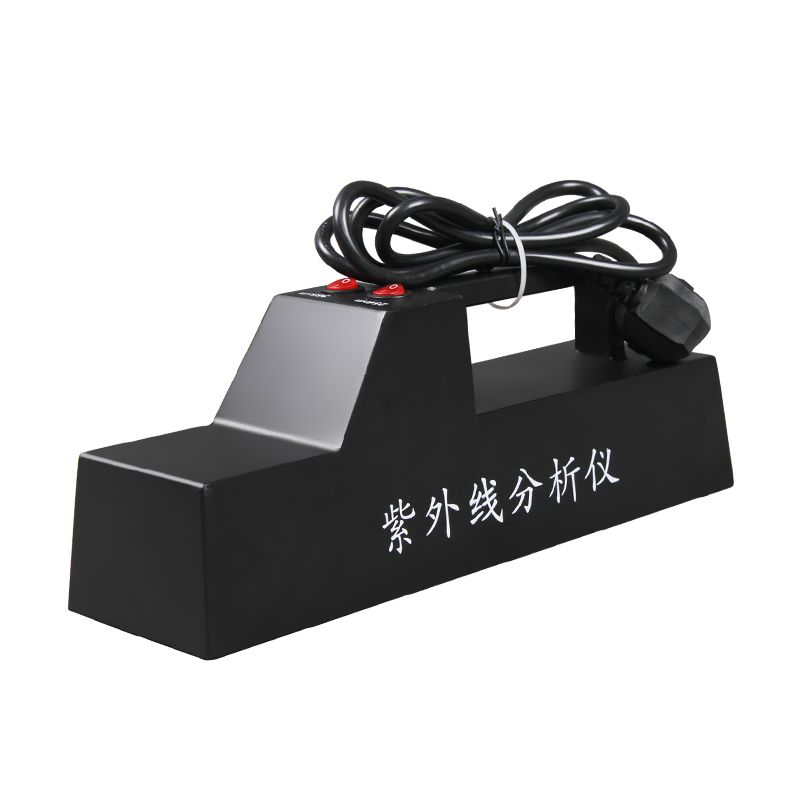
Operation method of portable ultraviolet analyzer
Portable UV analyzers typically include a power switch, wavelength selection buttons (such as 254nm, 365nm), and a sample placement area. The user first needs to connect the instrument to a power source (such as 220V ± 22V, 50Hz ± 1Hz), and then switch the desired wave (254nm or 365nm) through the button. During the measurement process, place the sample under a UV lamp to ensure even illumination of the light. To improve measurement accuracy, it is recommended to cover the instrument in a dark room or with a black cloth to reduce ambient light interference.