
what is hho dry cell
Our dry cell is a device that produces hydroxide (HHO) gas by electrolyzing water. It widely used in transportation such as cars, trucks, and ships. Dry cell design is more efficient compared to wet cell because it wastes less current when generating hydrogen gas.
The working principle of the dry cell HHO generator is to use the electrolysis process to decompose water into hydrogen and oxygen. Specifically, dry cells use stainless steel plates as electrodes and add NaOH or KOH as electrolyte solutions. These solutions are stored in a remote container. While the electrodes are placed inside the generator. The design of a dry cell typically includes multiple stainless steel plates separated by polyvinyl chloride spacers or oil resistant rubber gaskets to maintain appropriate spacing.
The dry cell HHO generator has been widely used in modern transportation due to its high efficiency, low maintenance, and strong adaptability. Its design and operating parameters can be optimized according to specific needs to achieve optimal performance and economic benefits.

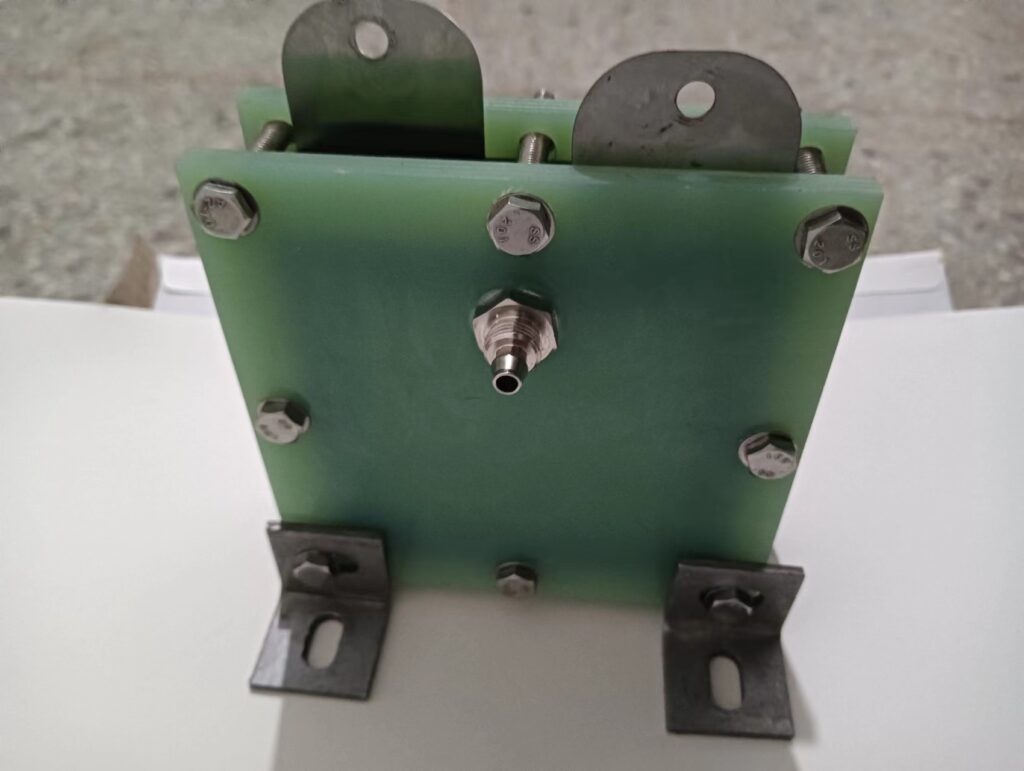
PRODUCT SPECIFICATIONS
| Model | C-4 | C-8 | C-12 | C-16 |
| Max Gas capacity | 1L/min | 2L/min | 3L/min | 4L/min |
| Plate Qty | 5 | 9 | 13 | 17 |
| Voltage | DC 12 | DC24v | DC36V | DC48V |
| Material of electrode | Corrosion resistance 304L stainless steel | |||
| Electrode thick | Up to 0.8mm | |||
| End plate material | Corrosion and high temperature resistance end plate | |||
| Inlet&outlet port | Port type and size can be customized | |||
dry HHO cell is an innovative technology that has gained attention in the field of alternative energy.
The main principle behind HHO cell is the electrolysis of water to produce hydrogen and oxygen gas. Commonly referred to as HHO gas. Unlike traditional wet electrolysis cells. The dry version aims to overcome some of the limitations associated with the presence of liquid water.
For instance, in a wet cell, issues such as electrolyte leakage and maintenance due to water management can be significant. The dry HHO cell attempts to address these problems by using solid-state materials or alternative methods to facilitate the electrolysis process.