
Introduction to laboratory water purification system
Our laboratory water purification system is an essential piece of equipment in any modern research facility.
It works by removing impurities and contaminants from water to produce high-purity water suitable for various laboratory applications. The purification process typically involves multiple stages.
One key method is reverse osmosis, which uses a semi-permeable membrane to filter out large molecules, ions, and particles. Another stage might involve deionization, where charged particles are removed through resin beds.
The advantages of a reliable laboratory water purification system are numerous. It ensures the accuracy and reproducibility of experiments. For instance, in analytical chemistry, pure water is crucial for precise measurements and analyses. Impurities in the water could lead to incorrect results and compromise the validity of research.
It also helps extend the lifespan of laboratory equipment. Using purified water in instruments like spectrophotometers and chromatographs reduces the risk of clogging and damage.
Different laboratories have specific requirements for water purity, and purification systems can be customized accordingly. Some systems are designed for small-scale laboratories, while others can meet the demands of large research facilities with high water consumption.
However, there are considerations to keep in mind. Maintenance and monitoring of the system are essential to ensure its continued performance. Filters and resins need to be replaced periodically to maintain purification efficiency.

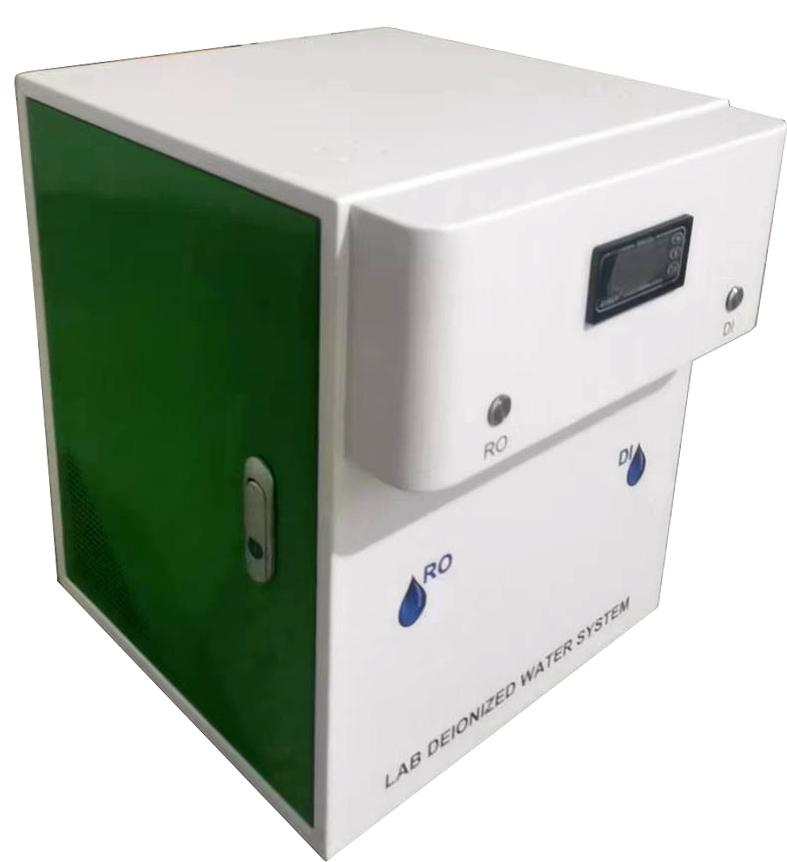
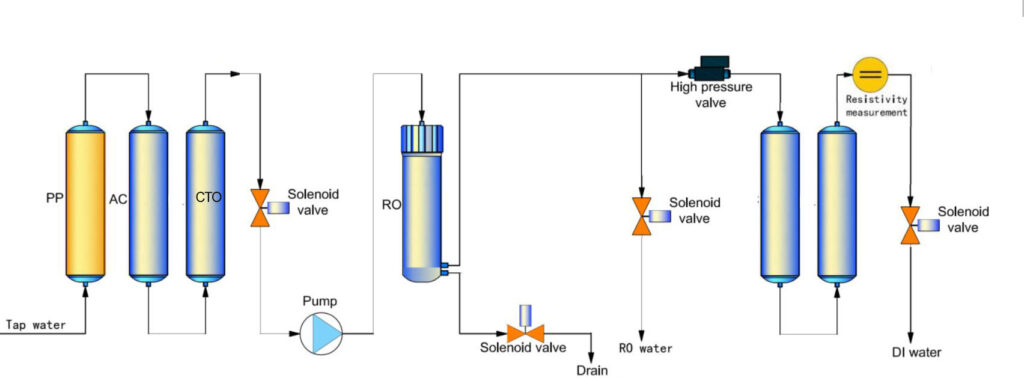
Parameter of ultra pure water system laboratory
warm welcome distributor all over the world
support OEM
if neeed price or interest cooperation,please email us to info@faradlab.com or faradlab@163.com
| Model | DI-15 | DI-30 | DI-45 | DI-60 | |||
| Output(25℃)* | 15 liters/hour | 30 liters/hour | 45 liters/hour | 60 liters/hour | |||
| Pure water outlet | One deionized water and one reverse osmosis water | ||||||
| Deionized water quality | |||||||
| Resistivity | 15-18.2MΩ.cm | ||||||
| Particle(>0.1μm) | N/A | N/A | N/A | N/A | |||
| RO water quality | |||||||
| Ion rejection rate | 96%-99% (new RO membrane) | ||||||
| Organic rejection rate | >99%, when MW>200 Dalton | ||||||
| Particles rejection rate | >99% | ||||||
| Feed water requirements | Tap water, temperature:5-45℃,pressure:1.0-4.0Kgf/cm2 | ||||||
| Electrical requirements | AC110-240V, 50/60Hz | ||||||
| Power | 55W | 60W | 70W | 78W | |||
Other related lab item