
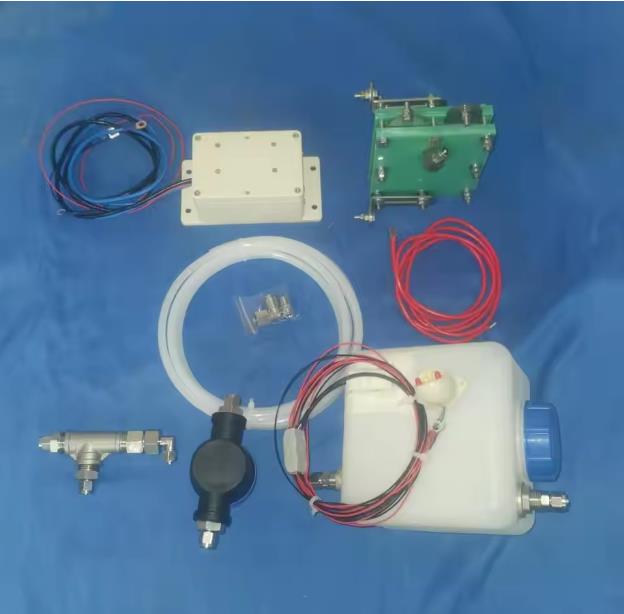
Introduction to hho car system
The HHO car system (also known as a Brown’s gas system or oxyhydrogen system) is an automotive modification device claimed to improve vehicle fuel efficiency and reduce emissions by generating a mixture of hydrogen and oxygen gases (HHO gas) through the electrolysis of water.
The basic operational workflow of an HHO system is as follows:
Electrolysis Process: An electrolysis unit decomposes water (H₂O) into hydrogen (H₂) and oxygen (O₂), thereby generating an HHO gas mixture.
Storage and Delivery: The generated gas is stored in a reservoir tank and subsequently delivered via tubing to the engine’s intake manifold.
Combustion Assistance: Upon mixing with air, the HHO gas enters the combustion chamber to serve as a supplementary fuel. The high-performance catalytic combustion properties of hydrogen facilitate highly efficient combustion of gasoline or diesel, thereby reducing overall fuel consumption, increasing horsepower, and lowering exhaust emissions.
PRODUCT SPECIFICATIONS
| Model | C-5 | C-10 | C-12 | C-16 |
| Plate Qty | 6 | 11 | 13 | 17 |
| Voltage | DC 12V | DC24v | DC36V | DC48V |
| Material of electrode | Corrosion resistance 304L stainless steel | |||
| Electrode thick | Up to 0.8mm | |||
| End plate material | Corrosion and high temperature resistance end plate | |||
| Inlet&outlet port | Port type and size can be customized | |||
Features
1.Fuel saving: 10% -30% for gasoline/diesel vehicles;
2.Emission reduction: Significant reduction in CO, hydrocarbons, and particulate matter;
3.Enhance power, clean carbon deposits, easy installation
Theory
Electrolysis to produce hydrogen and oxygen: The electrolytic cell (wet/dry) in the kit is filled with distilled water and electrolyte (potassium hydroxide KOH/sodium hydroxide NaOH). After being electrified, the water is decomposed into hydrogen and oxygen;
Intake assisted combustion: HHO gas enters the cylinder with air, and the hydrogen flame spreads quickly and burns fully, catalyzing complete combustion of fuel;
Claimed effect: Reduce unburned fuel, lower CO, HC, NO ₓ emissions, and clean up engine carbon deposits.